A USDA Web Soil Survey run over central Annapolis maps about 40% of the area as Annapolis-Urban land complex, and about 28% as water. Annapolis MD Basement Waterproofing reads the survey for what it says about drainage, and for what it cannot say about your lot.
The Short Answer
The mapped soil in central Annapolis is mostly well-drained Annapolis soil mixed with urban land, which is ground that has been built on, graded or filled. That makes it hard to guess what is under any one house. The Maryland Geological Survey puts most wet basements down to the foundation, landscaping and grading, not to rising groundwater.
What the Survey Shows
The survey was run over a box of 3,699.2 acres around central Annapolis in the Anne Arundel County survey area (MD003). The largest map units were:
| Map unit | Acres | Share of the area |
|---|---|---|
| Water | 1,040.4 | 28.1% |
| Annapolis-Urban land complex, 0 to 5 percent slopes (AuB) | 1,085.6 | 29.3% |
| Annapolis-Urban land complex, 5 to 15 percent slopes (AuD) | 409.6 | 11.1% |
| Urban land (Uz) | 214.4 | 5.8% |
| Udorthents, loamy, sulfidic substratum, 0 to 5 percent slopes (UxB) | 181.9 | 4.9% |
| Annapolis fine sandy loam, 15 to 25 percent slopes (AsE) | 85.3 | 2.3% |
The two Annapolis-Urban land complex units together cover about 40% of the area, which is more than half of the land. Udorthents are soils that have been cut or filled. The survey area also maps many smaller units, each under about 3%.
What USDA Says About the Annapolis Series
The Annapolis series is described by USDA as fine-loamy, glauconitic, with a fine sandy loam surface. USDA lists it as well drained, with a seasonal high water table deeper than 72 inches and low shrink-swell potential. That description fits soil that drains water down and does not swell and shrink the way clay does.
What the Survey Does Not Tell You
The Annapolis-Urban land complex is a mix of the Annapolis series and urban land, where the soil has been built on, graded or filled. The series description covers the natural soil, not the fill around your foundation. Urban land and Udorthents also change from one lot to the next, so the soil under your house may not match the map. A survey is a map of areas, not a test of one lot.
What This Means for a Basement
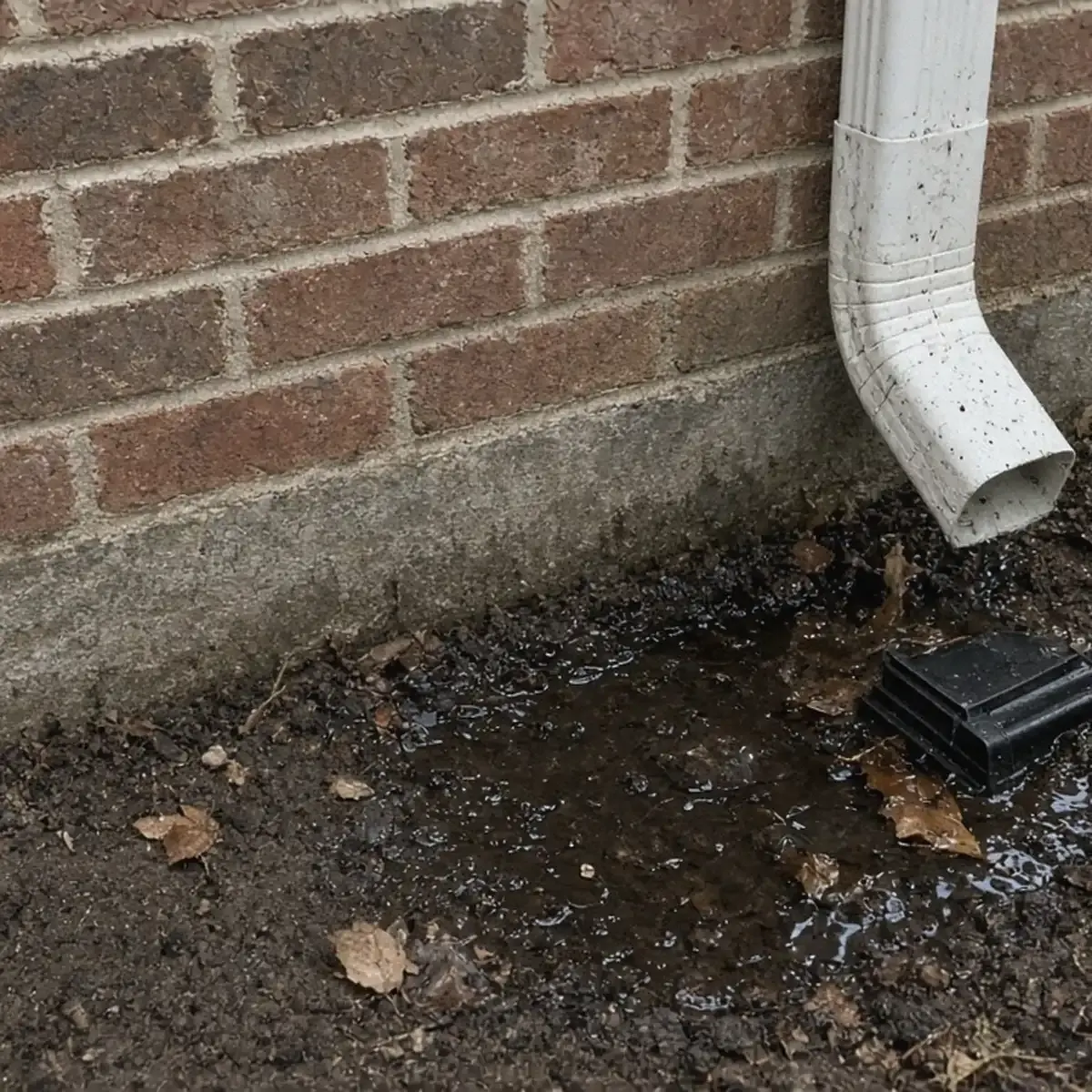
In soil that drains well, basement water can arrive from the surface and the wall as well as from the water table. The Maryland Geological Survey says water table depth varies both spatially and seasonally, and that areas with a relatively shallow water table can pose problems with infiltration into basements. Gutters, downspouts and grading are the first places we look. Why is my basement wet
Annapolis Rain and Housing
The NOAA climate normals for the Annapolis NAF, MD station (1991-2020) record 43.99 inches of precipitation a year. About 59% of occupied homes in Annapolis were built before 1980, according to the Census Bureau's American Community Survey (2020-2024). Waterproofing older Annapolis homes
Frequently Asked Questions
What kind of soil is in Annapolis?
A USDA Web Soil Survey run over central Annapolis maps the Annapolis-Urban land complex across about 40% of the area, with Urban land, Udorthents and smaller units besides. USDA describes the Annapolis series as well drained with low shrink-swell potential.
Does Annapolis soil swell and shrink like clay?
The Annapolis series is described by USDA as having low shrink-swell potential. Urban land and fill vary, so we do not assume your lot matches the series.
Does well-drained soil mean my basement will stay dry?
No. The Maryland Geological Survey attributes the majority of wet basements to the house foundation, landscaping and grading, not to rising groundwater. Gutters, grade and wall cracks send water to a basement in any soil.
Can I look up the soil under my house?
Yes. The USDA's Web Soil Survey lets you mark an area and read the map units for it. It is a map of areas, not a test of one lot, so it does not replace an inspection.
Does soil affect which waterproofing system I need?
It can. HomeGuide lists the water table and rainfall among the location factors in its cost guide. We choose the system by where the water enters, and the soil is part of that picture. Interior vs exterior waterproofing