
Interior Basement Waterproofing in Annapolis, MD for Seeping Walls and Floor Joints
Local providers install interior basement waterproofing in Annapolis homes. An interior system works on the water that has already reached the wall or the floor edge: it catches the water, sends it to a sump pump and pumps it out of the house. Call 410-438-1597 to be connected with a local provider.
HomeGuide's 2026 national guide lists the parts of an interior system as pumps, drains, sealers and crack filling. Which parts a basement needs comes from looking at where the water enters.
What Interior Waterproofing Involves in Annapolis
Interior drainage along the floor edge
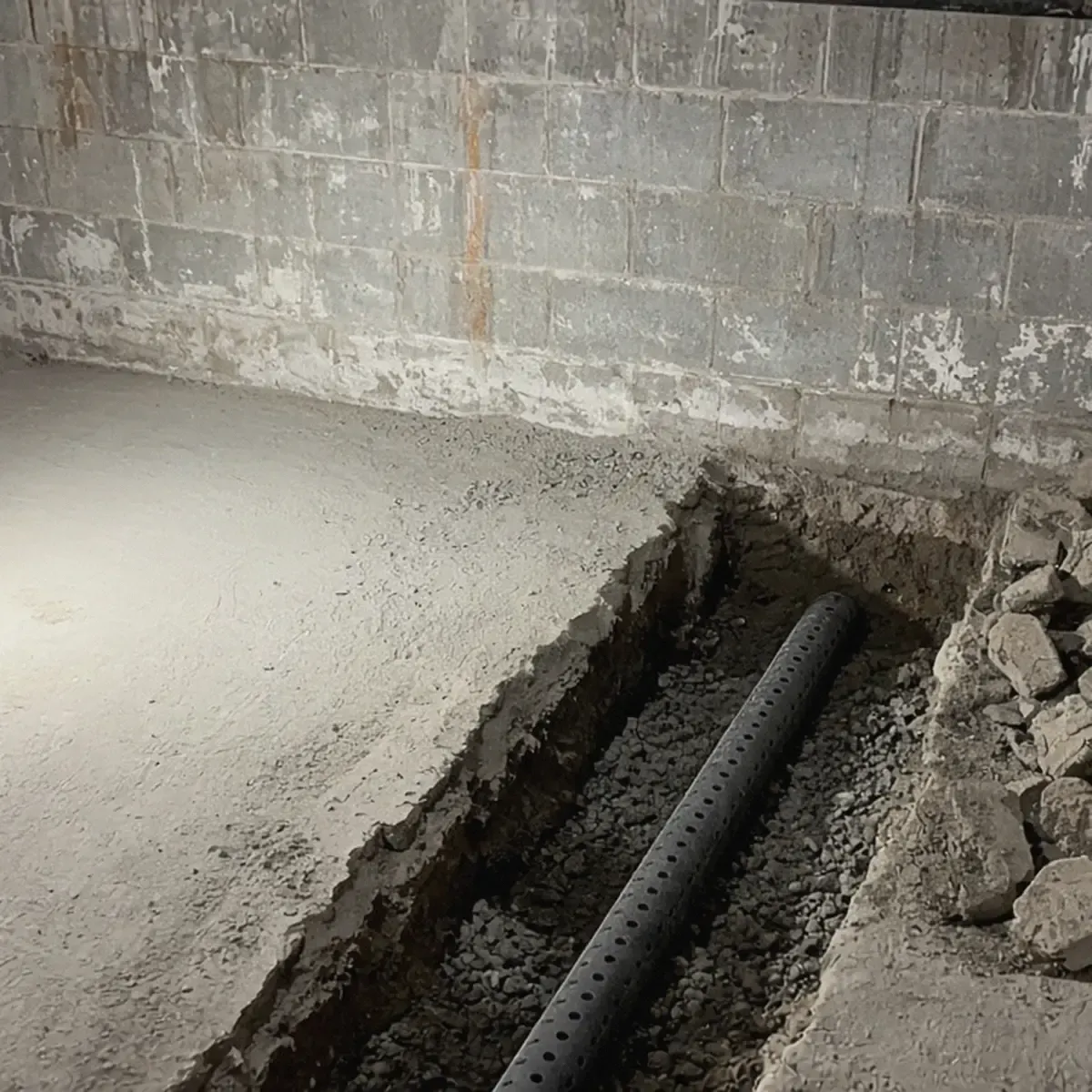
HomeGuide describes an interior French drain as a trench cut in the basement floor, filled with gravel and a perforated pipe, and connected to one or more sump pumps. The drain goes where the water shows up, usually along the wall and the floor joint, and the floor is finished over it. Sump pump installation
The sump pit and pump
The pump sits in a basin in the basement floor and pumps the collected water away from the house. The basin, the pump and the discharge line are set so the water leaves the house and does not come back to the wall.
Sealing the cracks that let water in
HomeGuide says epoxy injection seals minor cracks. The cracks that are letting water in get filled before drainage is relied on to handle the rest. Basement leak and crack repair
Why paint-on sealer alone is not a system
HomeGuide notes that sealers add a moisture barrier but "won't stop water under pressure." A sealer belongs as a finish on a system that moves water, not as the system.
Work is performed by independent professionals. Local providers start with an on-site inspection and a written scope before any work begins.
How an Interior System Gets Installed
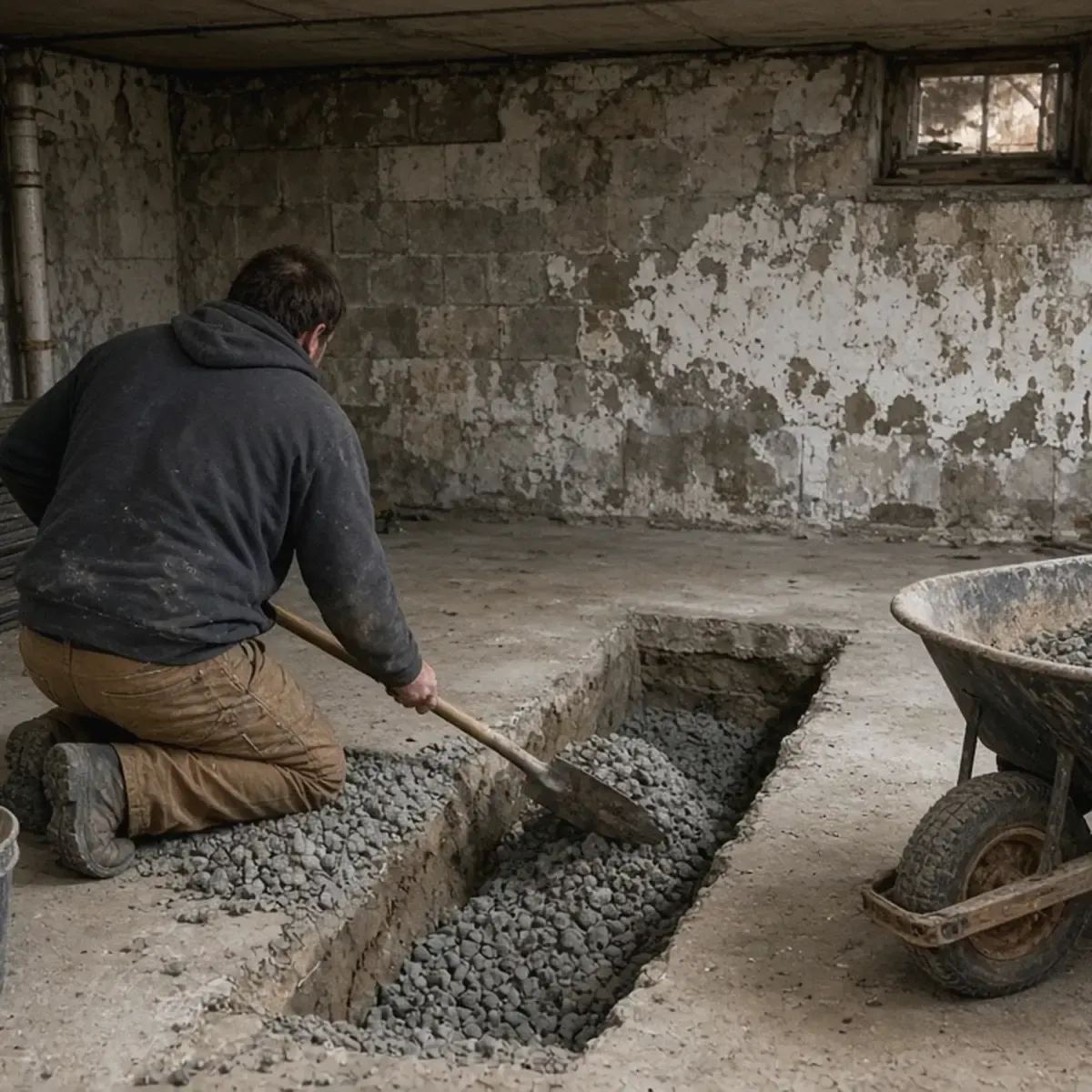
First comes an inspection of the basement, marking the damp wall sections, the cracks and the floor joint where water shows. Second, the gutters, downspouts and grading outside get checked, because an interior system is the wrong first fix when the water is simply being sent to the wall. Third, the plan is written with the drain footage, the pump, the discharge and the scope. Finally, the system is installed, tested with water and walked with you.
When an Interior System Fits
Interior drainage is a good match when water seeps through the wall or comes up at the floor joint and the outside of the house cannot be dug up easily. HomeGuide says interior options are usually less involved than excavation-based exterior work. If the water is coming from a downspout or a slope that leads to the wall, that gets fixed too. Interior vs exterior waterproofing
Why Annapolis Basements Need Drainage
The NOAA climate normals for the Annapolis NAF, MD station (1991-2020) record 43.99 inches of precipitation a year, and the Maryland Geological Survey says the water table is typically at its highest in the spring and early summer months. Areas with a relatively shallow water table can pose problems with infiltration into basements. Census Bureau figures (American Community Survey, 2020-2024) show that about 59% of occupied Annapolis homes were built before 1980. Why is my basement wet
Signs You May Need Interior Waterproofing
- Dampness along the base of a basement wall after rain
- Water at the joint where the wall meets the floor
- White or gray chalky residue on the walls
- A musty smell that comes back after cleaning
- Cracks that weep water in wet weather
- A floor that stays damp near the wall
One damp spot after a heavy storm can come from a clogged gutter. Water that returns each time it rains means the basement needs a way to move it out.
What Changes the Scope of an Interior Job
HomeGuide names the foundation type, the size of the basement, how severe the problem is and the method among the factors that change interior waterproofing work. Poured concrete is generally simpler to waterproof than block, and stone is the most involved. How much wall or floor edge needs drainage, how the water enters and what the pump and discharge need all shape the job for a specific home, which is why an on-site inspection comes first. How to compare waterproofing quotes
Frequently Asked Questions
Does interior waterproofing stop water from entering the wall?
No. An interior system manages water that has reached the wall or the floor joint by catching it and pumping it out. Exterior waterproofing is the method that keeps water from reaching the wall. A provider tells you which one fits your basement before the scope is written.
Will the basement floor have to be cut?
For an interior drain, yes. HomeGuide describes the drain as a trench cut in the basement floor and filled with gravel and a perforated pipe. The cut runs along the edge where the water shows up, and the floor is finished over the drain.
Do I need a sump pump with an interior drain?
Usually. HomeGuide describes the interior drain as connected to one or more sump pumps, which lift the collected water out. The pump is sized to the drain, and where the discharge goes is planned with it. Sump pump installation
Can I just paint on a waterproof sealer?
A sealer can add a moisture barrier, and HomeGuide says it "won't stop water under pressure." For a wall that seeps in wet weather, drainage does the work and a sealer is at most a finish.
Do I need a permit for interior waterproofing in Annapolis?
It depends on the work and the address. The City of Annapolis permit page lists installing or altering a plumbing system among the work that needs a permit, and its list of inspections includes drain tile and waterproofing. A provider should confirm what applies to your house before work starts.
Call Now for Interior Basement Waterproofing in Annapolis
For interior basement waterproofing in Annapolis, call 410-438-1597 to be connected with a local provider. You can also use the contact page, or start from the page on basement waterproofing in Annapolis, MD.