Interior waterproofing manages water after it reaches the basement, and exterior waterproofing keeps it from reaching the wall. HomeGuide's national guide (written January 23, 2026) puts interior at $6,000 to $12,000 on average and exterior at $10,000 to $18,000. Annapolis MD Basement Waterproofing explains how the two differ so you can compare quotes on the same terms.
The Short Answer
Choose by where the water enters and what can be reached. Interior drainage fits seepage at the wall and floor joint when the outside is hard to dig. Exterior waterproofing fits water pressing through the wall when the outside can be reached. Many homes need a smaller fix first, such as regrading or a downspout extension, and some need both systems.
Compare the Two Methods
| Interior waterproofing | Exterior waterproofing | |
|---|---|---|
| What it does | Collects water that reaches the wall or floor edge and pumps it out | Keeps water from reaching the wall |
| What it uses | Pumps, drains, sealers and crack filling | Grading, drains and membranes |
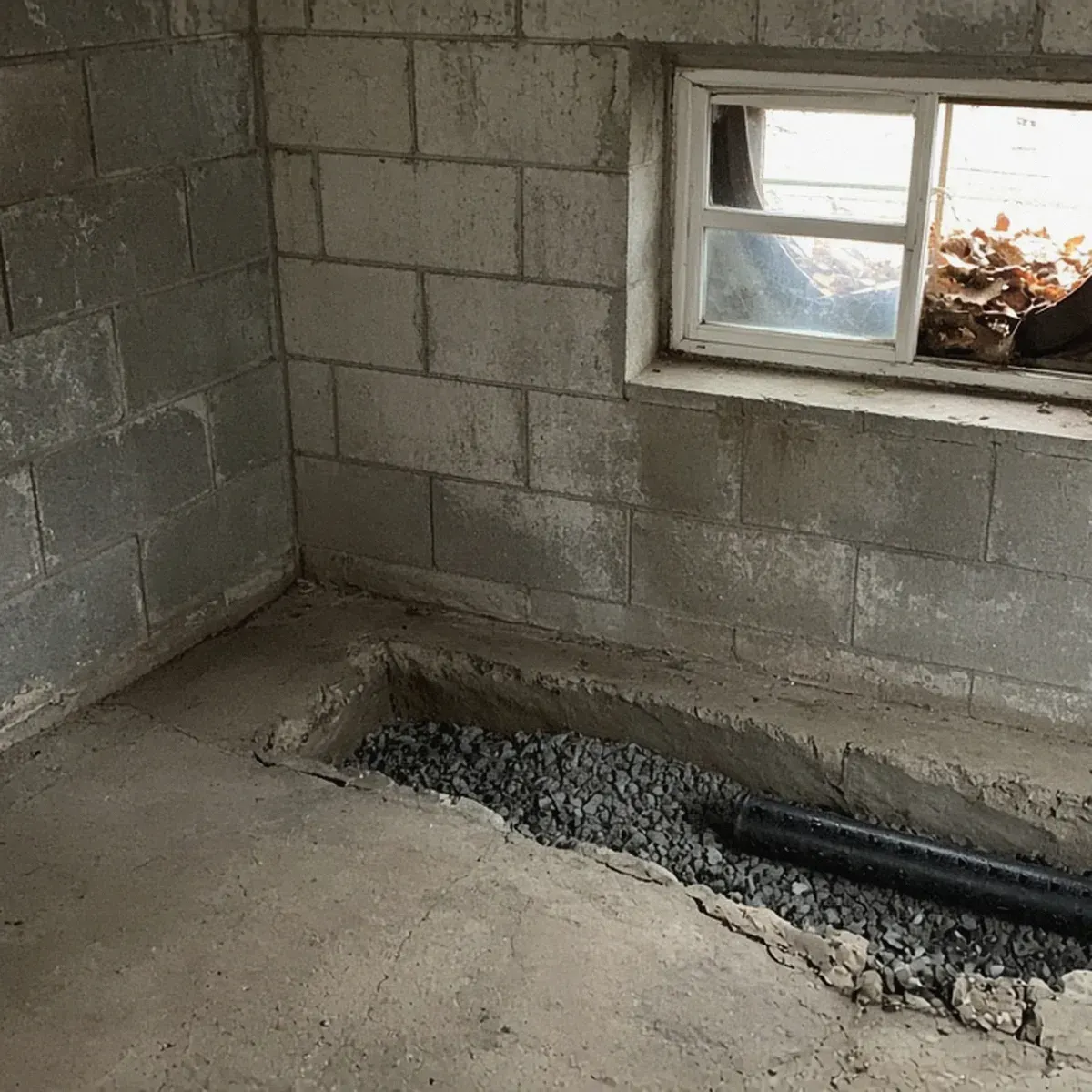
| How it is done | A trench is cut in the basement floor, filled with gravel and perforated pipe, and connected to a sump pump | The ground is excavated around the foundation, and drains and a membrane are installed |
| Average cost (HomeGuide, January 23, 2026) | $6,000 to $12,000 | $10,000 to $18,000 |
| Related figures | Sump pump $600 to $2,500 or more; epoxy crack injection $250 to $800 or more per crack | Exterior French drain $30 to $90 per linear foot; regrading $1,000 to $5,000 |
| Limit | HomeGuide says sealers "won't stop water under pressure" | Needs room to dig around the foundation |
When Interior Drainage Fits
Interior drainage fits seepage that shows up at the base of the wall or the floor joint, a basement where the outside is covered by a patio, a deck or a neighbor's fence line, and a home where cost matters, since HomeGuide says interior options usually cost less than excavation-based exterior work. Interior basement waterproofing
When Exterior Waterproofing Fits
Exterior work fits when water is pushing through the wall itself and the outside of the house can be reached. It also gives you the chance to repair the wall while it is exposed. Exterior projects in the Annapolis Historic District still need a certificate of approval, according to the City of Annapolis permit page. Exterior basement waterproofing
Start With the Cheaper Fixes
The Maryland Geological Survey attributes the majority of wet basements to the house foundation, landscaping and grading, not to rising groundwater. The EPA's guide to mold and moisture says to clean and repair roof gutters regularly and to make sure the ground slopes away from the building foundation. HomeGuide says regrading is occasionally enough on its own and puts downspout replacement at $220 to $625. We check the outside first on every inspection. Why is my basement wet
What Annapolis Homes Add to the Choice
The NOAA climate normals for the Annapolis NAF, MD station (1991-2020) record 43.99 inches of precipitation a year. The Census Bureau's American Community Survey (2020-2024) puts the share of occupied Annapolis homes built before 1980 at about 59%. HomeGuide says the foundation type changes the cost: poured concrete is generally cheaper to waterproof than block, and stone is the most expensive. We identify the wall material at the inspection.
Frequently Asked Questions
Which is better, interior or exterior waterproofing?
Neither is better in every case. Exterior waterproofing keeps water from reaching the wall, and it means digging around the foundation. Interior drainage manages the water that gets in and usually costs less. We look at where the water enters and how much of the house can be reached before we recommend one or both.
Can I do both?
Yes. HomeGuide says combining methods raises the total. Some basements need exterior repair of a wall and interior drainage for the water that still gets in.
Does exterior waterproofing mean digging up my whole yard?
Not always. HomeGuide says exterior drains and membranes require excavating around the perimeter. We dig the sections of wall that need work, and the plan shows which sections.
Is interior waterproofing a temporary fix?
No. It is a different approach. It manages water after it enters instead of stopping it at the wall. HomeGuide notes that sealers alone "won't stop water under pressure," so a sealer is not the same as a drainage system.
How do I compare an interior quote with an exterior quote?
Compare the cause each one names, the length of wall or drain, the pump and the discharge, the warranty in writing and the contractor's MHIC license. How to compare waterproofing quotes